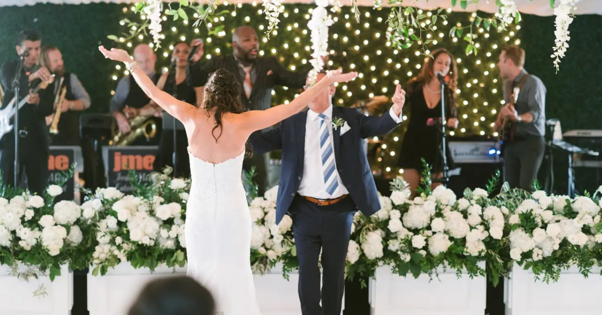
Why Timing Matters for Wedding Reception Music Flow
Most couples spend a lot of time choosing the songs they want to hear on their wedding day. They think about the grand entrance, the first dance, and the songs that will get everyone on the dance floor. What often gets overlooked is timing.
The truth is that great music alone does not create a great reception. Even the most talented band can struggle if important moments happen at the wrong time.
Think about a wedding where guests sit through several speeches, wait too long for dancing to start, or experience long pauses between activities. The excitement starts to fade, and people naturally lose interest.
That is why luxury weddings are carefully planned from start to finish. Every moment has a purpose, and every transition is designed to keep guests engaged. A strong wedding reception music flow helps the evening feel smooth, exciting, and enjoyable for everyone in the room.
What Is Wedding Reception Music Flow?
Your reception is made up of several key moments. Guests arrive at cocktail hour, celebrate your grand entrance, enjoy dinner, listen to toasts, watch special dances, and eventually head to the dance floor.
Each of these moments matters. The challenge is making them work together. A reception should feel like one continuous celebration, not a series of separate events. Guests should never feel like they are waiting around wondering what happens next.
That is where good timing comes in. A well-planned wedding entertainment flow connects every part of the evening. Music helps move guests from one moment to the next while keeping the energy steady throughout the celebration.
How Poor Timing Can Drain the Energy
Many receptions lose momentum because the schedule becomes too heavy in one area. One of the biggest problems is stacking too many speeches together. Guests enjoy hearing from family and friends, but after several long speeches, attention starts to drift. Conversations begin, people check their phones, and the excitement in the room drops.
Another common issue is waiting too long to open the dance floor. After dinner, guests are usually ready for something fun. If more formalities keep getting added, people become tired or lose interest. Some may even leave before dancing begins.
We have seen weddings where the room was full of excitement during dinner, but by the time the dance floor opened, many guests had already settled into their seats.
Long periods without music can also hurt the atmosphere. Smooth wedding reception transitions help keep guests focused on the celebration instead of wondering what is happening next.
The Ideal Wedding Reception Music Timeline
A successful reception does not feel rushed, but it also does not feel slow. Each part of the evening should naturally lead into the next.
Cocktail Hour
Cocktail hour is the first chance for guests to relax and enjoy themselves after the ceremony. Light and upbeat music works well because it encourages conversation while creating a welcoming atmosphere. Guests mingle, grab a drink, and settle into the celebration.This is where the energy starts to build.
Grand Entrance
The grand entrance should feel exciting.The right song immediately grabs attention and signals that the reception is officially underway. This moment sets the tone for the rest of the evening and helps create excitement before dinner begins.
Dinner Music
The best dinner music wedding selections add to the atmosphere without taking over the room.
Guests want to talk with family and friends while enjoying their meal. Softer songs and familiar favorites help create a comfortable setting while keeping the celebration moving forward.
Toasts and Formalities
Toasts are important, but shorter is often better. When speeches are concise, guests stay engaged and the evening continues to flow naturally. Music between formal moments helps avoid awkward pauses and keeps the room connected.
First Dance
The first dance timing is one of the most memorable parts of the reception. Many couples choose to place it shortly after dinner and speeches. This creates a natural emotional moment before the celebration shifts into a more energetic phase.
Open Dance Floor
The best time to open the dance floor is before guests start losing energy. If dancing begins while excitement is still high, guests are much more likely to participate. A strong wedding music timeline helps make sure that happens.
How Professional Wedding Bands Help Keep Things Moving
A great band does more than play songs. Professional musicians pay attention to what is happening in the room. They watch how guests respond and help keep the evening moving in the right direction.
Strong wedding band coordination is a big part of this process. The entertainment team works closely with planners and other vendors so that important moments happen smoothly.
During dancing, musicians can adjust the pace of the evening based on guest participation. If the crowd is engaged, they keep that momentum going. If the room needs a boost, they know how to bring the energy back.
This helps maintain strong dance floor energy throughout the night.
Common Wedding Reception Timing Mistakes
Some timing mistakes show up again and again at weddings. Too many formal events packed together can slow the celebration down. Dinner running late can push everything else behind schedule.
Opening the dance floor after 9:30 PM often means some guests have already lost interest or gone home.
Another mistake is skipping transition music altogether. Even short musical moments help keep the evening connected.
Poor communication between vendors can also create delays. When everyone is working from the same plan, the event feels smoother and more organized.
These small details can have a major impact on overall reception music timing.
Why Luxury Weddings Focus on Reception Flow
Luxury weddings are about creating a great experience for guests. Every part of the evening is designed to feel natural and enjoyable. The goal is not simply to fill time. The goal is to keep people engaged from the moment they arrive until the final song. Music plays a huge role in that experience.
A well-planned reception creates emotional highs, fun moments, and opportunities for guests of all ages to celebrate together. Good live wedding music planning helps create those experiences while maintaining strong wedding reception energy from start to finish.
Many wedding professionals rely on proven reception pacing ideas because they know that guests remember how a wedding felt long after the event is over.
Final Thoughts
When couples think about wedding music, they often focus on song choices. While those songs matter, timing is what brings everything together.
The right music at the right moment keeps guests engaged, prevents energy from dropping, and helps the celebration feel effortless. Good timing turns separate events into one unforgettable experience.
At Jordan Music Entertainment, we believe every reception should feel smooth, exciting, and connected from beginning to end. Through careful planning, experienced event leadership, and the live performance of N’Demand, we help create celebrations where every musical moment happens at the right time and every guest feels part of the experience.
FAQs
How long should cocktail hour music last?
Most cocktail hours last between 60 and 90 minutes, depending on the wedding schedule and photography needs.
When should dancing start at a wedding reception?
Dancing usually works best after dinner and key formalities, before guests begin losing energy.
Why does wedding reception timing matter?
Good timing keeps guests engaged and helps the celebration flow naturally throughout the evening.
Should a wedding band coordinate with the planner?
Yes. Working together helps ensure smooth transitions and a better overall experience for guests.
What type of music works best during dinner?
Soft live music, ballads, and familiar songs that allow guests to enjoy conversation are usually ideal.
Can live bands adjust the reception flow in real time?
Experienced bands can read the room, manage transitions, and help maintain momentum throughout the event.